How Seniors Can Manage Chronic Pain Without Relying on Medication — A Practical Guide
Chronic pain is one of the most common and least well-managed health conditions in older adults. Estimates suggest that more than half of community-dwelling older adults experience persistent pain — and among those living in care facilities, the proportion is higher still. Back pain, joint pain, neuropathic pain, headaches, fibromyalgia — the sources vary, but the impact is consistent: reduced mobility, disrupted sleep, limited activity, social withdrawal, and a significant effect on mood and quality of life.
The standard medical response to chronic pain has historically centered on medication — NSAIDs, opioids, muscle relaxants, nerve pain agents. These medications have genuine roles in pain management, but in older adults they carry risks that are more significant than in younger populations. NSAIDs increase gastrointestinal bleeding risk and can worsen kidney function and cardiovascular disease. Opioids carry risks of cognitive impairment, falls, constipation, and dependence. Many commonly used pain medications appear on the Beers Criteria — the American Geriatrics Society's list of potentially inappropriate medications for older adults — precisely because their risk-benefit profile shifts with age.
A Personal Reflection: Gratitude Amid Cancer Treatment and Empathy for Chronic Pain
Many people around me worry deeply, knowing that cancer patients — especially those with tumors in their bones — often endure excruciating pain. I am profoundly grateful that, despite my diagnosis and treatment, I have not experienced significant pain so far. It feels like a quiet blessing amidst a difficult journey.
Yet, the fear of pain is something universal, whether one is facing cancer or not. In daily life, I often encounter fellow seniors and acquaintances who suffer endlessly from chronic pain, sharing their heartwrenching struggles. Seeing their daily distress is a deeply heartbreaking experience, which makes understanding effective, non-pharmacological pain management all the more vital for our senior community.
What is less well known — and less well communicated to patients — is that non-pharmacological approaches to chronic pain management have substantial evidence behind them, often comparable to or exceeding that for medication in long-term outcomes. This guide covers what works, why it works, and how older adults can implement these approaches practically.
Understanding Chronic Pain — Why It's Different From Acute Pain
Managing chronic pain effectively requires understanding how it differs from acute pain — because the approaches that work for acute pain often don't work for chronic pain, and vice versa.
Acute pain is the body's alarm system — a signal that tissue is damaged or threatened. It serves a protective function, and it resolves when the underlying damage heals. Rest and pain relief are appropriate responses to acute pain because they allow healing to occur.
Chronic pain — pain that persists beyond the expected healing time, typically defined as pain lasting more than three months — operates differently. In many cases of chronic pain, the original tissue damage has healed, but the nervous system has become sensitized — calibrated to produce pain signals in response to stimuli that would not have caused pain before. This central sensitization means that chronic pain is partly a feature of the nervous system itself, not just of the peripheral tissue.
This distinction matters practically because it explains why approaches that target the nervous system — exercise, cognitive behavioral therapy, mindfulness, sleep improvement — are effective for chronic pain in ways that purely physical interventions aren't. It also explains why rest — the intuitive response to pain — tends to worsen chronic pain over time by allowing deconditioning, increasing fear of movement, and amplifying central sensitization.
Exercise — The Most Evidence-Supported Intervention
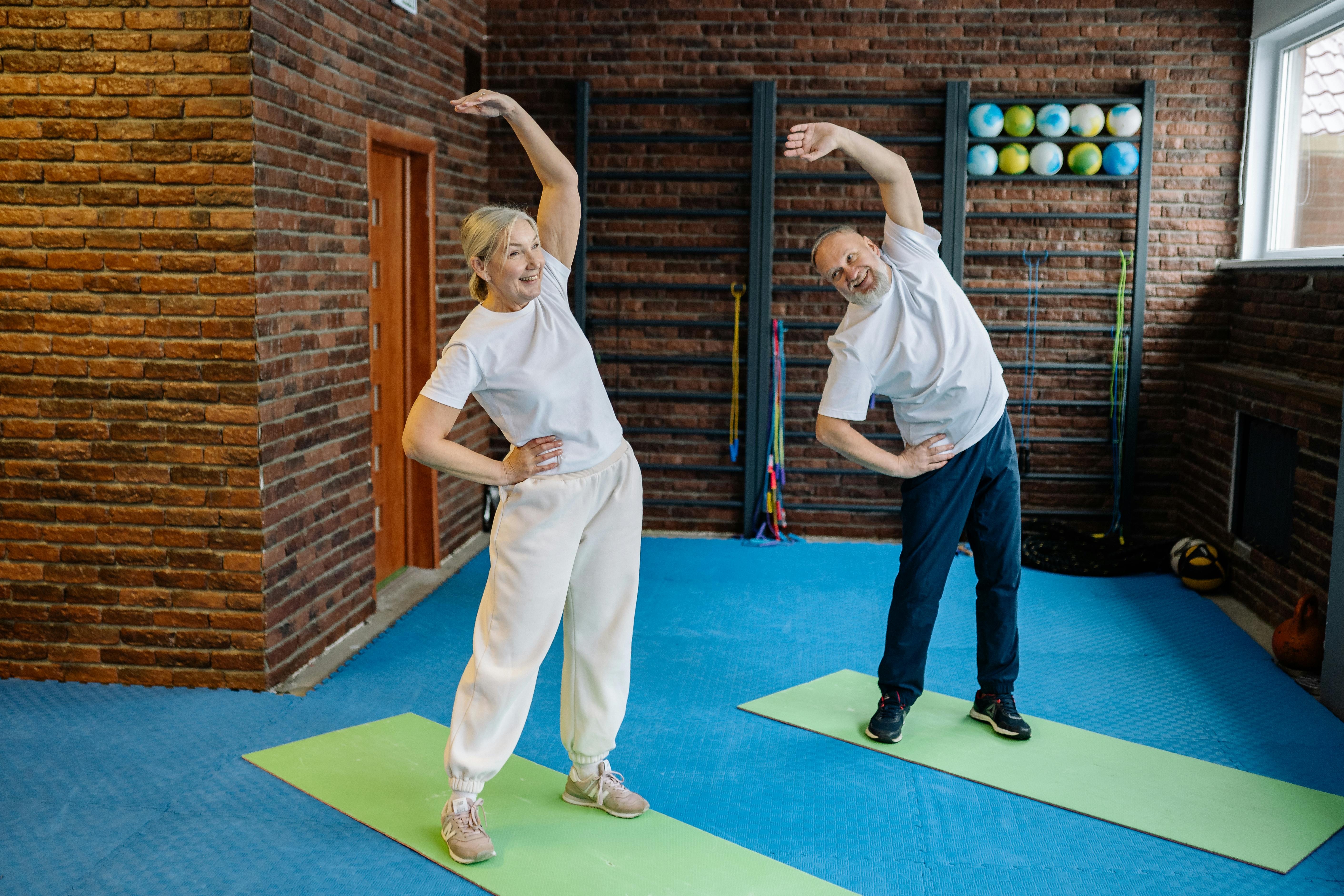
It seems counterintuitive to people in pain, but exercise is consistently the most evidence-supported non-pharmacological intervention for most forms of chronic pain in older adults. The evidence base covers osteoarthritis, chronic low back pain, fibromyalgia, neuropathic pain, and general chronic musculoskeletal pain.
The mechanisms are well understood. Exercise reduces systemic inflammation — one of the primary drivers of chronic pain. It stimulates the release of endogenous opioids and endocannabinoids — the body's own pain-modulating chemicals. It builds the muscle strength that supports joints and reduces mechanical load on painful structures. It improves sleep, which has a bidirectional relationship with pain — better sleep reduces pain sensitivity, and reduced pain improves sleep. And it counteracts the central sensitization that maintains chronic pain by gradually recalibrating the nervous system's pain response through progressive exposure to movement.

The type of exercise matters somewhat, but not as much as consistency. For most older adults with chronic pain, a combination of low-impact aerobic activity — walking, swimming, cycling, water aerobics — and gentle strength training produces the best results. Tai chi and yoga have particularly strong evidence for chronic pain, likely because they combine movement with breath awareness and the attentional focus that directly modulates pain processing.
The most important practical point is starting at a genuinely manageable level and progressing gradually. Pain during exercise doesn't necessarily mean harm — distinguishing between the discomfort of movement after a period of deconditioning and pain that signals tissue damage is an important skill, often best developed with guidance from a physical therapist. Working with a physical therapist who specializes in pain management to design and progress an exercise program is the most reliable way to start.
Cognitive Behavioral Therapy for Pain
Cognitive behavioral therapy adapted for chronic pain — CBT-P — is one of the most extensively studied psychological interventions in medicine, with a substantial evidence base across pain conditions. It is recommended as a first-line treatment for chronic pain by the American College of Physicians and other major clinical guidelines — yet most people with chronic pain have never been offered it.
CBT-P works by addressing the thoughts, beliefs, and behaviors that amplify and perpetuate chronic pain. Catastrophizing — the tendency to interpret pain as threatening, overwhelming, and uncontrollable — is one of the strongest predictors of pain severity and disability, independent of the actual degree of physical pathology. Pain-related fear and avoidance — avoiding activities because of anticipated pain — produces deconditioning and disability that make pain worse over time.
CBT-P provides tools for identifying and modifying these patterns. It teaches pain neuroscience education — understanding that pain is a product of the nervous system rather than simply a reflection of tissue damage — which reduces the threat value of pain and opens space for more adaptive responses. It addresses sleep, activity pacing, and the psychological consequences of living with pain including depression and anxiety.
The evidence shows that CBT-P reduces pain intensity, improves function and quality of life, and produces more durable outcomes than medication in long-term follow-up. It is available through psychologists trained in pain management, through multidisciplinary pain clinics, and increasingly through digital programs that make it accessible without requiring frequent clinic visits.
Mindfulness-Based Stress Reduction and Pain
Mindfulness-based stress reduction has accumulated a substantial evidence base for chronic pain management. The mechanism is distinct from distraction or relaxation — mindfulness training changes the relationship to pain rather than simply reducing pain intensity.
Pain involves two components that are neurologically separable: the sensory component — the physical sensation itself — and the affective component — the suffering, fear, and aversion that accompany it. Mindfulness practice, through sustained attention to present-moment experience without judgment, reduces the affective component of pain — the suffering layered on top of the sensation — without necessarily reducing the sensation itself. Over time and with consistent practice, this shift in relationship to pain produces meaningful reductions in pain-related disability and quality of life even when the underlying physical condition hasn't changed.
Research on mindfulness for chronic pain has found reductions in pain catastrophizing, reduced opioid use, improved mood, and better quality of life. A particularly relevant finding for older adults is that mindfulness practice reduces pain sensitivity — the threshold at which stimuli are perceived as painful — through its effects on central pain processing.
Structured MBSR programs are available through hospitals, community centers, and online platforms. For people who find formal programs inaccessible, consistent daily practice of 15 to 20 minutes using guided meditation apps or recordings produces meaningful benefit over months of practice.
Physical Therapy and Manual Therapy
Physical therapy is probably the most underutilized non-pharmacological pain intervention available to older adults. A skilled physical therapist does several things that are difficult to replicate through self-directed exercise alone.
They identify the specific movement patterns, muscle imbalances, and postural habits that are contributing to pain and address them directly through targeted exercise prescription. They use manual therapy techniques — joint mobilization, soft tissue work, myofascial release — that reduce pain and restore movement in ways that exercise alone doesn't. They provide graded exposure to movements that have become feared and avoided — systematically expanding the range of activity that feels safe and manageable. And they educate patients about pain neuroscience in ways that change the relationship to pain.
Medicare covers physical therapy for medically necessary conditions — most chronic pain conditions qualify. Given the evidence for physical therapy and the risks of long-term pain medication use in older adults, physical therapy is underutilized relative to its evidence base and cost-effectiveness.
Heat, Cold, and Other Physical Modalities
Several physical modalities have meaningful evidence for chronic pain relief and are accessible without professional involvement.
- Heat Therapy: Warm baths, heating pads, warm paraffin for hands — increases blood flow, reduces muscle tension, and modulates pain signals. It is most effective for muscle pain and stiffness. Moist heat penetrates more effectively than dry heat. Heat should not be applied to acutely inflamed joints — warmth that feels soothing to muscle pain can worsen acute joint inflammation.
- Cold Therapy: Ice packs, cold compresses — reduces acute inflammation and provides analgesia through its effects on nerve conduction. It is most useful for acutely inflamed joints and for post-activity soreness in the context of an exercise program.
- TENS (Transcutaneous Electrical Nerve Stimulation): Uses small electrical currents applied through skin electrodes to modulate pain signals. The evidence is mixed across conditions, but some people with chronic back pain, neuropathic pain, and musculoskeletal pain find meaningful relief. TENS units are available without prescription and are relatively inexpensive.
- Topical Treatments: Particularly topical NSAIDs like diclofenac gel and topical capsaicin — provide local pain relief with substantially lower systemic absorption than oral medications. For localized joint pain, topical NSAIDs are recommended as a first-line treatment by major clinical guidelines, with a better safety profile than oral NSAIDs in older adults.
Sleep — The Pain-Sleep Cycle
The relationship between chronic pain and sleep is bidirectional and self-reinforcing in both directions. Chronic pain disrupts sleep — pain is more prominent at night, and the positions required for sleep may aggravate certain pain conditions. Poor sleep, in turn, increases pain sensitivity — research has shown that sleep deprivation lowers pain thresholds and amplifies the affective response to pain stimuli. The result is a cycle in which pain worsens sleep and poor sleep worsens pain.
Intervening on sleep is one of the most underappreciated approaches to chronic pain management. Cognitive behavioral therapy for insomnia — CBT-I — produces improvements in both sleep and pain outcomes in people with chronic pain. Sleep hygiene measures — consistent timing, morning light, limiting alcohol, creating a wind-down routine — address the behavioral contributors to poor sleep in ways that benefit pain as well.
For older adults managing chronic pain, sleep improvement deserves explicit attention as a pain management strategy, not just as a separate health goal.
Social Connection and Meaning
Chronic pain does not exist in isolation from the rest of a person's life. Pain is amplified by isolation, depression, loss of purpose, and lack of social connection — and it is moderated by meaningful activity, close relationships, and a sense of engagement with life.
The mechanisms are neurobiological. Social connection activates the same endogenous opioid pathways that pain medications target. Meaningful activity and a sense of purpose reduce the threat value of pain — when the brain is engaged with something that matters, pain commands less of its attention. Depression — which is both a consequence and an amplifier of chronic pain — responds to the same social and purposeful engagement that benefits cognitive health.
For older adults whose chronic pain has led to progressive withdrawal from activity and social life, addressing that withdrawal directly — through gradual re-engagement with valued activities, social connection, and sources of meaning — is part of comprehensive pain management, not a separate issue.
A Practical Framework
Closing Thoughts
Chronic pain in older adults is genuinely difficult — it is undertreated, misunderstood, and often inadequately addressed by a healthcare system that defaults to medication as the primary response. The non-pharmacological approaches covered in this guide are not alternatives to medicine in the sense of being less effective — in many cases, particularly for long-term outcomes, they outperform pharmacological approaches while carrying substantially lower risk.
The challenge is that they require more active participation than taking a pill. Exercise, CBT-P, mindfulness, physical therapy — these require effort, consistency, and time before results become apparent. For people in significant pain, that barrier is real and deserves acknowledgment.
But the investment is worth making. The older adults who manage chronic pain most effectively are typically those who have developed a toolkit of non-pharmacological strategies — not those who have found the right medication. Building that toolkit, ideally with professional support, is one of the most valuable things a person with chronic pain can do for their long-term function and quality of life.


Comments
Post a Comment